
Introduction
- When buying running shoes, most people check the design, color, comfort, and price first. But one important thing that many people forget to look at is the sole material.
- The sole is the main part of the shoe that supports your feet while walking or running. It helps reduce pressure, provides better stability, and protects your feet from hard surfaces. A good sole can make your running experience more comfortable, while a poor-quality sole can make your feet feel tired.
- Today, running shoes come with different types of sole materials. Some materials focus more on comfort and softness, while others provide better durability and support.
- Which sole material is best for running shoes? It depends on your running style, where you run, and what type of comfort you need from your shoes.
- In this guide, we will understand different sole materials, their benefits, and how to choose the right one for your running needs.
Why Is Sole Material Important in Running Shoes
- Many people think that expensive shoes always provide better comfort, but the sole material plays a major role in the overall performance of a running shoe.
- The sole works as a protective layer between your feet and the ground. Every step creates pressure, and a good sole helps absorb that impact.
A good running shoe sole provides:
- Better shock absorption
- More comfort while running
- Improved balance
- Better grip on different surfaces
- Longer shoe life
- Whether you go for a morning run, workout at the gym, or train regularly, choosing the right sole material can improve your overall experience.
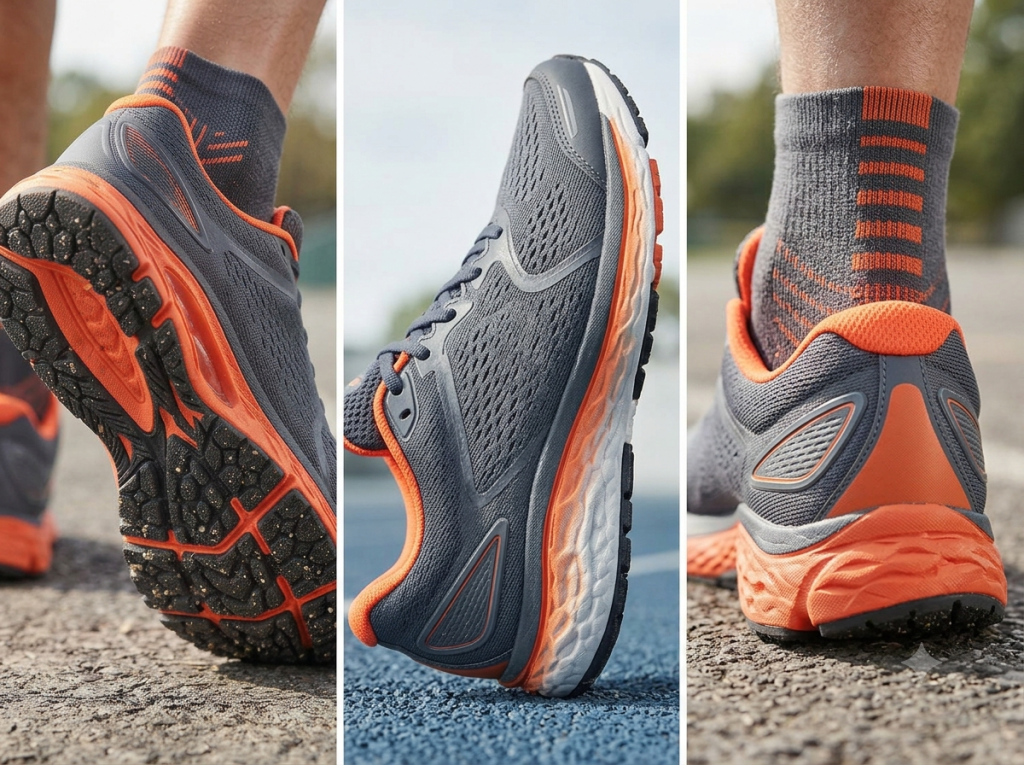
Different Parts of a Running Shoe Sole
- Before understanding sole materials, let’s look at the main parts of a running shoe sole.
Outsole: The Part That Touches the Ground
- The outsole is the bottom layer of the shoe that comes in contact with the ground.
- Its main job is to provide grip and protect the shoe from damage. A strong outsole helps you stay stable while running on roads, tracks, and different surfaces.
Midsole: The Cushioning Part of the Shoe
- The midsole is one of the most important parts of a running shoe when it comes to comfort.
- It is placed between the outsole and the upper part of the shoe. The midsole helps absorb shock and gives comfort with every step.
Insole: The Comfort Layer Inside the Shoe
- The insole is the soft layer inside the shoe where your foot rests.
- It provides extra comfort and helps improve the fitting of the shoe.
Popular Sole Materials Used in Running Shoes
EVA Sole: A Comfortable Choice for Daily Running
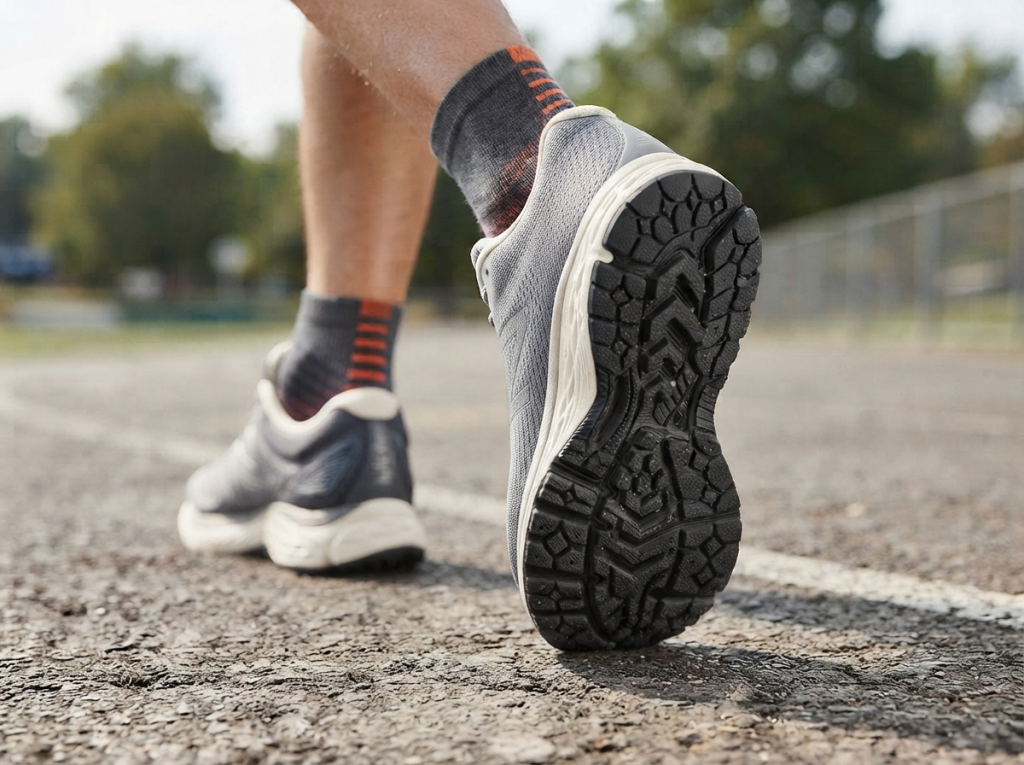
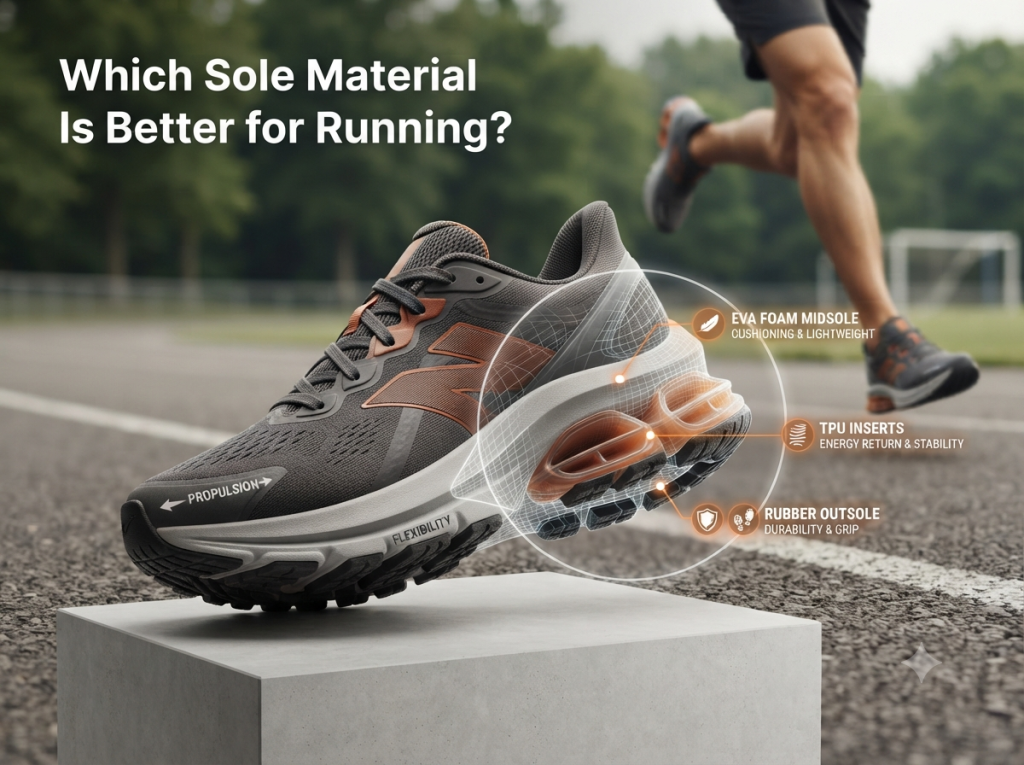
- EVA (Ethylene Vinyl Acetate) is one of the most commonly used materials in running shoes.
- It is popular because it is lightweight, flexible, and comfortable to wear. Its soft cushioning makes it a good choice for people who want comfortable shoes for daily activities.
- EVA helps reduce the impact on your feet and provides a smooth feel while running.
Advantages of EVA Sole
- Lightweight and easy to wear
- Soft cushioning
- Flexible movement
- Good shock absorption
- Affordable option
Disadvantages of EVA Sole
- Cushioning may reduce after long use
- Less durable compared to TPU
Best For:
- Beginners
- Daily jogging
- Walking
- Casual runners
- If you want lightweight shoes with good comfort, EVA can be a great choice.
TPU Sole: A Durable Choice for Regular
Runners
- TPU (Thermoplastic Polyurethane) is a strong material designed for runners who need more durability and support.
- Compared to EVA, TPU is stronger and maintains its shape for a longer time. It also gives better energy return, which helps you feel more comfortable and active while running.
Advantages of TPU Sole
- Excellent durability
- Better stability
- Maintains shape longer
- Good energy return
- Suitable for regular use
Disadvantages of TPU Sole
- Slightly heavier than EVA
- More expensive
Best For:
- Regular runners
- Long-distance running
- Fitness training
If you run frequently and need long-lasting shoes, TPU can be a good option.
Rubber Sole: Best for Grip and Durability
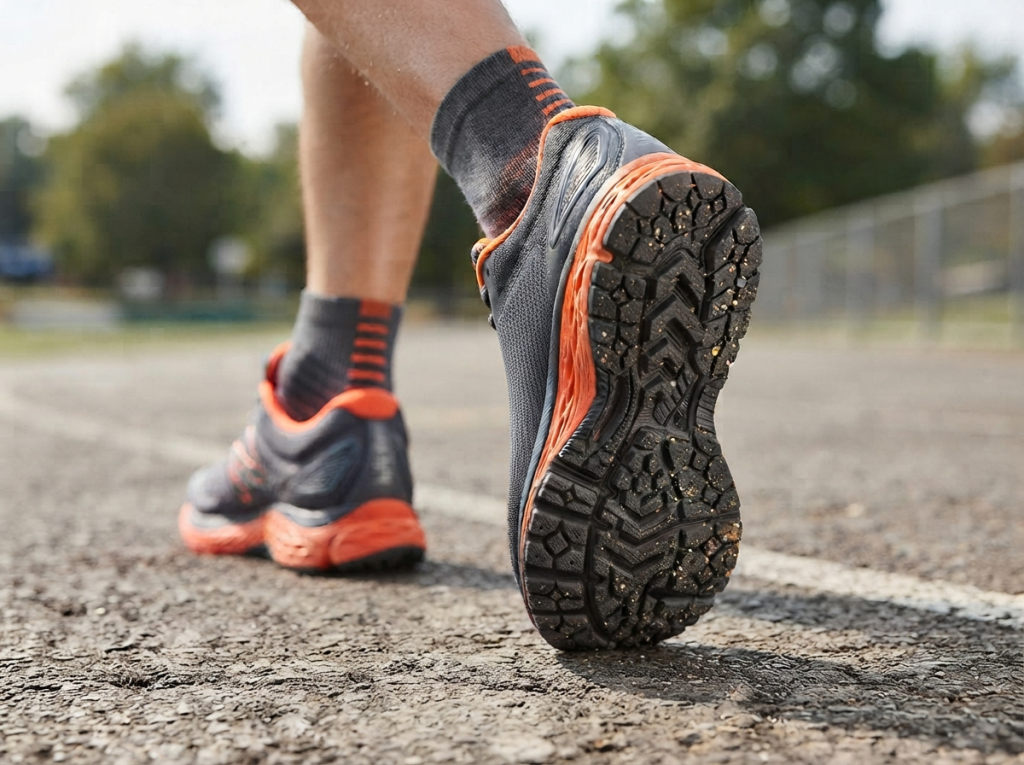
- Rubber is mostly used in the outsole of running shoes because it provides strong grip and protection.
- When running outdoors, grip is very important. A rubber outsole helps keep your feet stable and reduces the chances of slipping.
Advantages of Rubber Sole
- Strong grip
- Highly durable
- Better protection
- Good for outdoor use
Best For:
- Road running
- Outdoor workouts
- Everyday footwear
A running shoe with a comfortable midsole and rubber outsole gives a good balance of comfort and durability.
PU Sole: Strong and Long-Lasting Material
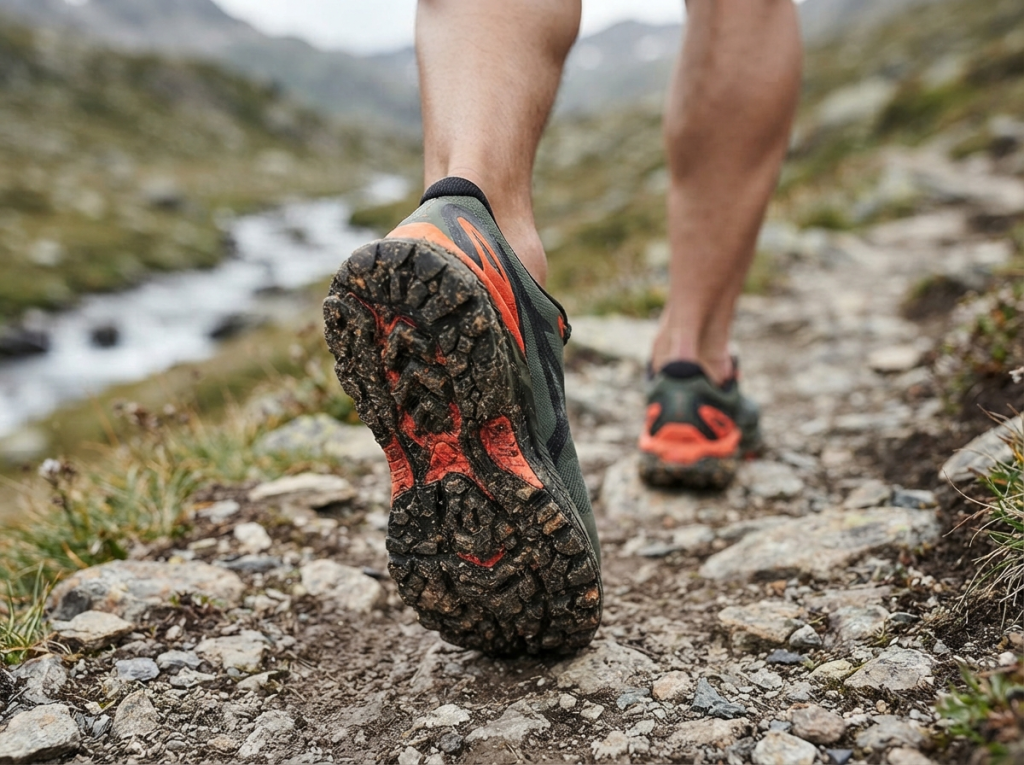
- PU (Polyurethane) is another material used in shoe soles because of its strength and durability.
- It provides good support but feels heavier compared to EVA.
Advantages of PU Sole
- Long-lasting
- Strong structure
- Good stability
Disadvantages
- Heavier feel
- Less soft cushioning
Best For:
- People who want durability
- Heavy daily use
- Long-term footwear
Which Sole Material Is Better for Running?
- There is no single sole material that is perfect for every runner.
- The right choice depends on your personal needs.
Go for EVA If You Prefer:
- Lightweight shoes
- Soft cushioning
- Comfortable daily running
Choose TPU If You Want:
- Better durability
- More support
- Regular running performance
Choose Rubber For:
- Better grip
- Outdoor running
- Longer outsole life
- For most runners, a combination of EVA or TPU cushioning with a strong rubber outsole works well.
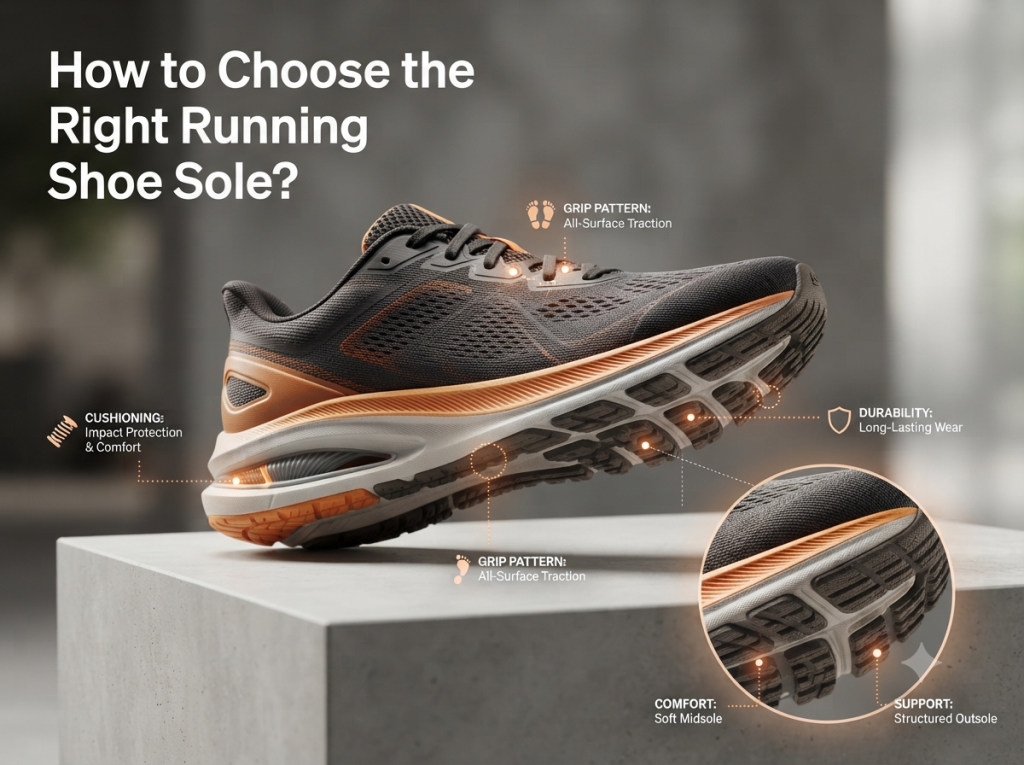
How to Choose the Right Running Shoe Sole?
Understand Your Running Routine
- If you run occasionally, choose a comfortable and lightweight sole.
- If you run every day, look for a material that provides better durability.
Check Where You Run
- For outdoor running, choose shoes with good rubber grip.
- For indoor workouts, lightweight cushioning can be enough.
Always Focus on Comfort
- The best sole is the one that feels comfortable and suits your feet. Your shoes should support your movement without causing discomfort.
Why Choose VOPDOS Running Shoes?
- At VOPDOS, we believe running shoes should provide more than just a stylish look.
- Our goal is to create shoes that offer comfort, durability, and everyday performance at an affordable price.
Lightweight Feel
Lightweight shoes help you move freely and stay comfortable throughout the day.
Comfortable Cushioning
Good cushioning helps reduce impact and makes running more enjoyable.
Better Sole Grip
A durable outsole provides better stability on different surfaces.
Stylish Design
At VOPDOS, we combine comfort and style so you can feel confident with every step.
Tips to Make Your Running Shoes Last Longer
Clean Your Shoes Regularly
Remove dust and dirt to maintain the quality of your shoes.
Use Them for Running Only
Avoid wearing running shoes everywhere to increase their lifespan.
Keep Them Dry
Let your shoes dry naturally after use.
Replace Old Shoes
If cushioning feels low or grip becomes weak, it may be time to buy a new pair.
Conclusion
- Choosing the best sole material for running shoes depends on your comfort, running style, and daily needs.
- EVA is a great option for people who want lightweight comfort, while TPU is better for runners who need durability and support. Rubber is important because it provides better grip and protection.
- At VOPDOS, we focus on creating running shoes that offer the right balance of comfort, quality, and style so every step feels better.
Frequently Asked Questions (FAQs)
Which sole material is best for daily running?
EVA is a popular choice for daily running because it is lightweight and provides comfortable cushioning.
Is TPU better than EVA for running shoes?
TPU provides better durability and support, while EVA offers softer cushioning and a lightweight feel.
Why is rubber used in running shoe soles?
Rubber provides strong grip, durability, and protects the shoe from wear.
Which sole material lasts the longest?
TPU and rubber usually last longer because they handle regular wear better.
Are lightweight running shoes better?
Yes, lightweight shoes can make running more comfortable and reduce tiredness.
When should I replace my running shoes?
You should replace your shoes when the sole loses grip, cushioning becomes less effective, or the shoes look worn out.